Shared vs Dedicated Proxies: Performance and Risk
Last updated: 2026-02-16
Quick Definition
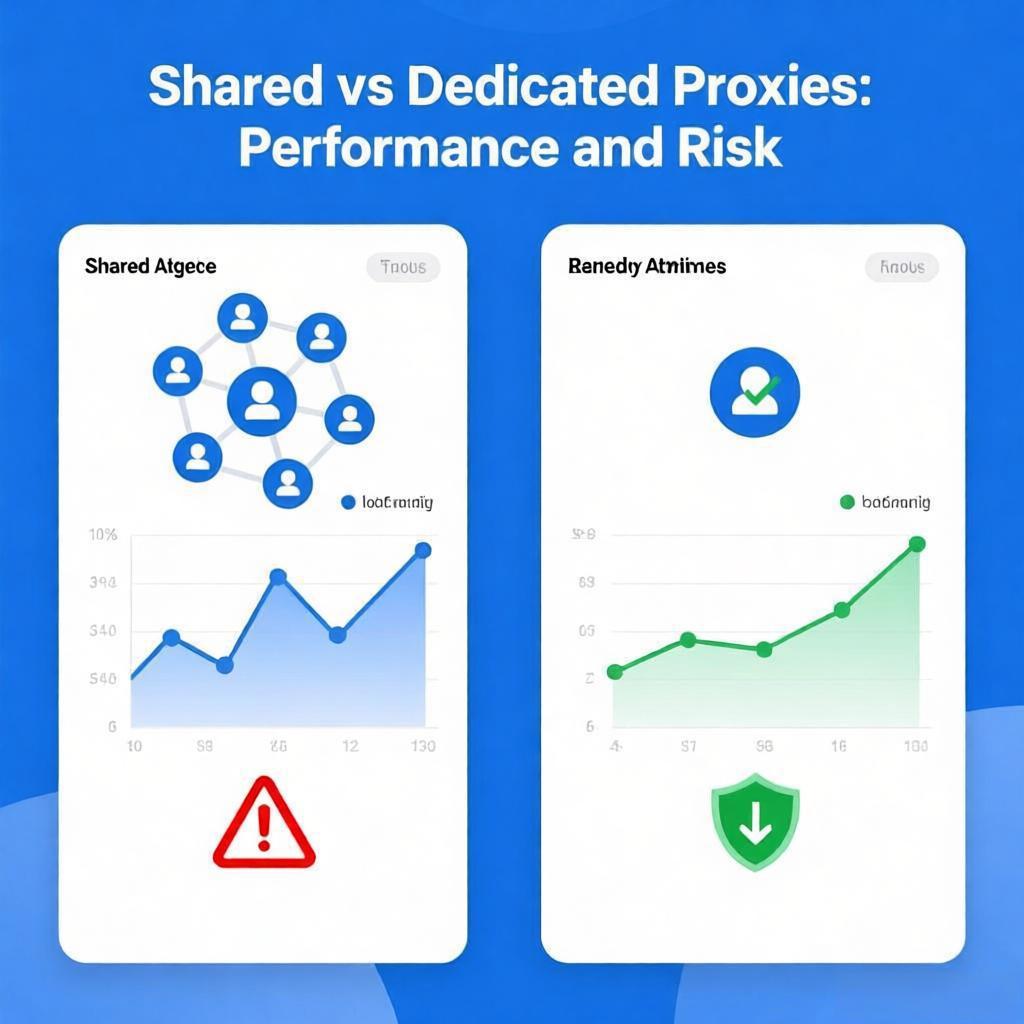
Shared proxies allow multiple users to simultaneously use the same proxy IP addresses, reducing costs through shared infrastructure. Dedicated proxies (also called private proxies) assign IPs exclusively to a single user, eliminating contention and reputation risks from other users' activities. The choice impacts performance, reliability, IP reputation, and cost—dedicated proxies cost more but offer clean IPs and consistent performance.
How Each Type Works
Shared Proxy Architecture:
┌─────────────────────────────────────────────────────────────────┐
│                                                                 │
│ Proxy IP: 198.51.100.45                                         │
│                                                                 │
│ ├── User A (you) → Request to amazon.com                        │
│ ├── User B → Request to ebay.com                                │
│ ├── User C → Request to facebook.com                            │
│ └── User D → Request to target.com                              │
│                                                                 │
│ All users share the same IP simultaneously                      │
│                                                                 │
│ Implications:                                                   │
│ ├── If User B gets IP flagged → affects all users              │
│ ├── Bandwidth shared among users                                │
│ ├── Possible concurrent request limits                          │
│ └── Lower cost (split among users)                              │
│                                                                 │
└─────────────────────────────────────────────────────────────────┘

Dedicated Proxy Architecture:
┌─────────────────────────────────────────────────────────────────┐
│                                                                 │
│ Proxy IP: 198.51.100.45                                         │
│                                                                 │
│ └── You (exclusive) → All your requests                         │
│                                                                 │
│ No other users on this IP                                       │
│                                                                 │
│ Implications:                                                   │
│ ├── IP reputation is entirely your responsibility              │
│ ├── Full bandwidth available                                    │
│ ├── No concurrent limits from other users                       │
│ └── Higher cost (infrastructure not shared)                     │
│                                                                 │
└─────────────────────────────────────────────────────────────────┘
Feature Comparison
| Feature | Shared Proxies | Dedicated Proxies |
|---|---|---|
| User Access | Multiple users per IP | Single user per IP |
| IP Reputation Risk | Affected by other users | Controlled by you only |
| Performance | Variable (depends on load) | Consistent (no contention) |
| Bandwidth | Shared among users | Full allocation to you |
| Typical Users per IP | 3-10+ users | 1 user |
| Cost | $0.50-2 per IP/month | $2-10 per IP/month |
| Use Case Fit | Non-sensitive, testing | Production, critical tasks |
| IP Refresh Policy | Pool may rotate users | Same IP for subscription term |
Risk Comparison
| Risk Type | Shared Proxies | Dedicated Proxies |
|---|---|---|
| Pre-flagged IPs | Common (previous users' abuse) | Rare (clean IPs or your history) |
| Sudden blocks | Possible (other user activity) | Only from your own actions |
| Rate limit sharing | Yes (combined user requests) | No (full quota available) |
| CAPTCHA triggers | Higher (IP reputation issues) | Lower (clean history) |
| Account association | Risk (other accounts on same IP) | None (exclusive use) |
| Blacklist inclusion | Higher probability | Lower probability |
Performance Metrics
Performance Comparison (Typical Values):
─────────────────────────────────────────────────────────────────

                    Shared              Dedicated
Speed               Variable            Consistent
├── Peak            50-200 Mbps         100-500 Mbps
├── Average         20-80 Mbps          80-400 Mbps
└── Minimum         5-30 Mbps           50-200 Mbps

Latency             Variable            Consistent
├── Best            30-50 ms            20-40 ms
└── Worst           100-300 ms          40-80 ms

Uptime              98-99%              99.5-99.9%

Success Rate        70-90%              90-99%
(depends on target and other users)

─────────────────────────────────────────────────────────────────

Why Shared Performance Varies:
┌─────────────────────────────────────────────────────────────────┐
│ User A: Streaming video → High bandwidth consumption           │
│ User B: Bulk downloading → Saturating connection               │
│ User C: Light browsing → Minimal impact                        │
│ You: Trying to work → Competing for remaining bandwidth        │
│                                                                 │
│ Dedicated: All bandwidth reserved for your operations          │
└─────────────────────────────────────────────────────────────────┘
Test proxy performance with the Proxy Tester. Check IP reputation status using the IP Checker.
Use Case Comparison
| Use Case | Recommended | Reason |
|---|---|---|
| Development/testing | Shared | Cost-effective for non-production |
| Casual browsing | Shared | Low stakes, price matters more |
| Production scraping | Dedicated | Reliable performance, clean IPs |
| Account management | Dedicated | Avoid account association risks |
| E-commerce operations | Dedicated | Clean IPs for checkout |
| SEO monitoring | Dedicated | Accurate SERP results |
| Ad verification | Both viable | Depends on verification sensitivity |
| Learning/experimentation | Shared | Minimize cost while learning |
FAQ
How many users typically share a "shared" proxy?
This varies by provider and plan tier. Budget shared proxies may have 5-10+ users per IP, while "semi-dedicated" plans limit sharing to 2-3 users. Providers rarely disclose exact numbers—if IP reputation matters, assume shared means potentially many users and plan accordingly.
Can I get a dedicated IP that was previously shared?
Possibly, depending on the provider's inventory management. Some providers rotate IPs between shared and dedicated pools. Request verification of IP history or a clean IP when purchasing dedicated proxies if reputation is critical. Reputable providers typically offer clean IPs for dedicated plans.
Why would anyone choose shared proxies?
Cost is the primary reason. For non-sensitive tasks like development testing, content viewing, or learning, shared proxies provide functionality at 50-80% lower cost. If occasional blocks or CAPTCHAs are acceptable trade-offs, shared proxies offer significant savings.
Do dedicated proxies guarantee no blocks?
No. You control the IP's reputation going forward, but target websites use many detection methods beyond IP history—behavioral analysis, fingerprinting, rate patterns. Dedicated proxies eliminate the "other users" variable but don't make you invisible. Proper usage patterns still matter.
Is "semi-dedicated" a middle ground option?
Yes. Semi-dedicated proxies limit sharing to 2-3 users, reducing (but not eliminating) reputation risks while keeping costs lower than fully dedicated. They work well for medium-sensitivity tasks where you need better reliability than shared but don't require complete exclusivity.
How do I know if my shared proxy IP is flagged?
Signs include: frequent CAPTCHAs, blocked requests that work from other IPs, slow response times, or error pages mentioning suspicious activity. Use IP reputation checking services to verify if your IP appears on blacklists. If consistently flagged, request a different IP from your provider or upgrade to dedicated.
Related Tools
- Proxy Tester - Test proxy speed and reliability
- IP Checker - Check IP reputation and classification
- HTTP Headers Checker - Verify proxy header behavior
Ready to start scraping?
Get access to millions of residential proxies across 195+ countries. Instant activation.
Get Started Now