Static vs Rotating Residential Proxies: When to Use Each
Last updated: 2026-02-15
Quick Definition
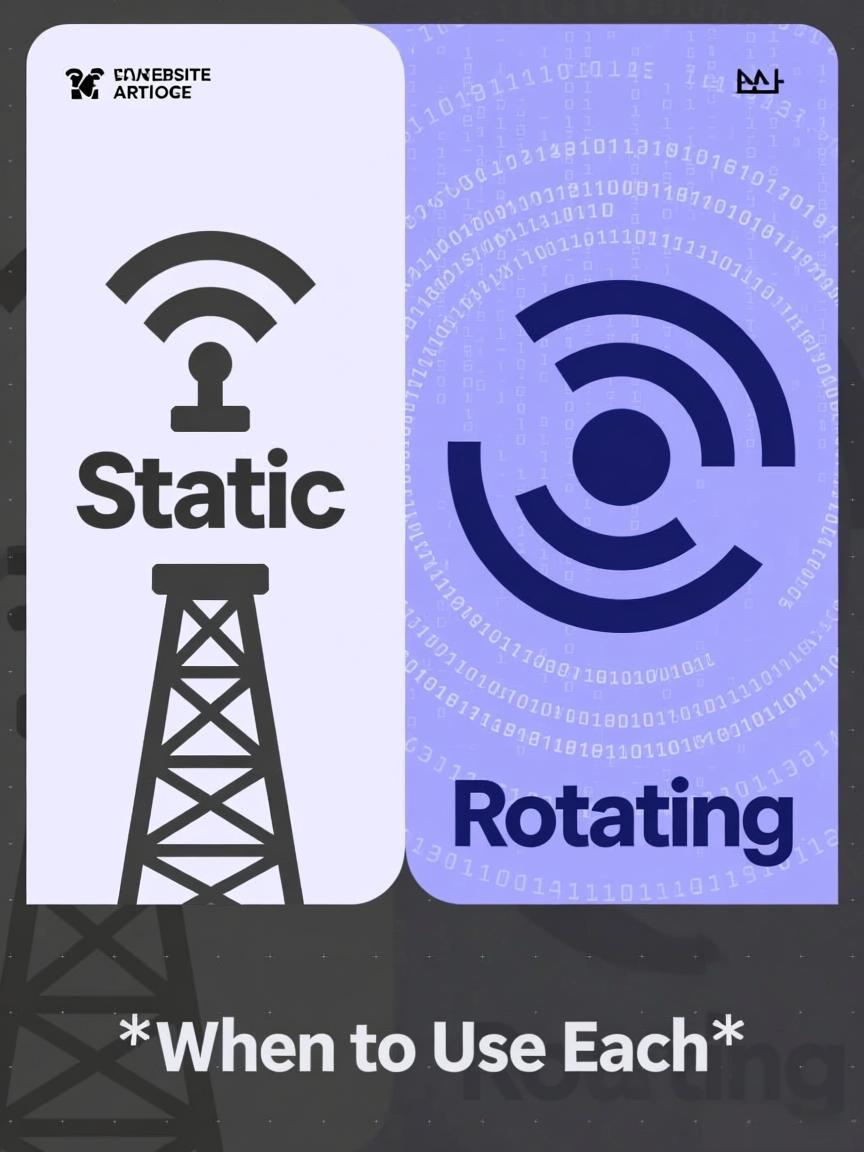
Static residential proxies (also called ISP proxies) provide a fixed IP address that remains constant for the duration of your subscription—typically weeks or months. Rotating residential proxies automatically assign a different IP from a pool for each request or after a set time interval. Both use ISP-assigned IPs, but they serve fundamentally different use cases based on whether you need IP consistency or IP diversity.
How Each Type Works
Static Residential (ISP Proxy):
┌─────────────────────────────────────────────────────────────────┐
│                                                                 │
│ You purchase: 1 static IP (e.g., 73.45.167.89)                  │
│                                                                 │
│ Request 1 → 73.45.167.89 → target.com                           │
│ Request 2 → 73.45.167.89 → target.com                           │
│ Request 3 → 73.45.167.89 → target.com                           │
│ ...                                                             │
│ Request N → 73.45.167.89 → target.com                           │
│                                                                 │
│ Same IP for entire subscription period (30, 60, 90 days)        │
│                                                                 │
│ Characteristics:                                                │
│ ├── IP is exclusively yours                                     │
│ ├── Builds consistent browsing history                          │
│ ├── Maintains session cookies naturally                         │
│ ├── Appears as one stable user over time                        │
│ └── Hosted in datacenter, registered under ISP ASN              │
│                                                                 │
└─────────────────────────────────────────────────────────────────┘

Rotating Residential:
┌─────────────────────────────────────────────────────────────────┐
│                                                                 │
│ You access: Pool of 10M+ residential IPs                        │
│                                                                 │
│ Request 1 → 73.45.167.89  → target.com                          │
│ Request 2 → 86.23.45.102  → target.com                          │
│ Request 3 → 91.12.78.234  → target.com                          │
│ Request 4 → 24.56.89.177  → target.com                          │
│ ...                                                             │
│ Request N → Different IP  → target.com                          │
│                                                                 │
│ New IP per request (or after session timeout)                   │
│                                                                 │
│ Characteristics:                                                │
│ ├── Shared pool with other users                                │
│ ├── Automatic IP rotation                                       │
│ ├── Massive geographic diversity                                │
│ ├── Harder to track/block by IP                                 │
│ └── Traffic routes through actual home connections              │
│                                                                 │
└─────────────────────────────────────────────────────────────────┘
Feature Comparison
| Feature | Static Residential | Rotating Residential |
|---|---|---|
| IP Consistency | Same IP always | Changes per request/session |
| Exclusivity | Dedicated to you | Shared pool |
| Pool Size | Buy specific quantity (1-1000+) | Access to millions |
| Session Handling | Natural (same IP = same session) | Requires sticky session config |
| Speed | Fast (datacenter-hosted) | Variable (peer-dependent) |
| Uptime | 99.9% (server infrastructure) | Peers go offline unpredictably |
| Pricing Model | Per IP per month | Per GB of traffic |
| Typical Cost | $2-5 per IP/month | $5-15 per GB |
Technical Specifications
| Specification | Static Residential | Rotating Residential |
|---|---|---|
| Infrastructure | Datacenter servers with ISP IPs | Peer network (SDK/apps) |
| IP Assignment | Purchased directly from ISP | Borrowed from opt-in users |
| ASN Type | ISP ASN (residential classification) | ISP ASN (residential classification) |
| Connection Type | Direct to proxy server | Through gateway to peer device |
| Latency | 10-50ms (datacenter) | 50-300ms (peer routing) |
| Bandwidth | 100Mbps-1Gbps | Variable (home connection speed) |
| Protocol Support | HTTP, HTTPS, SOCKS5 | HTTP, HTTPS, SOCKS5 |
Use Case Comparison
| Use Case | Best Choice | Reason |
|---|---|---|
| Account management | Static | Accounts need consistent IP history |
| E-commerce accounts | Static | Platforms track IP consistency |
| Large-scale scraping | Rotating | Need IP diversity to avoid blocks |
| Price monitoring | Rotating | Many requests across sites |
| Checkout/purchasing | Static | Payment requires stable identity |
| Ad verification | Rotating | View ads from many locations |
| Market research | Rotating | Gather diverse geographic data |
| Gaming/streaming | Static | Need stable connection for sessions |
Test your proxy performance using the Proxy Tester. Verify IP classification with the IP Checker.
Decision Framework
Choose Static Residential When:
─────────────────────────────────────────────────────────────────
✓ Managing accounts that track login IP
✓ Making purchases or financial transactions
✓ Need consistent identity over days/weeks
✓ Speed and uptime are critical
✓ Working with limited number of targets
✓ Budget is per-account based

Choose Rotating Residential When:
─────────────────────────────────────────────────────────────────
✓ Scraping at scale (thousands of pages)
✓ Need geographic diversity
✓ Targets actively block repeated IPs
✓ Session persistence isn't required
✓ Want maximum IP pool access
✓ Budget is traffic-based

Hybrid Approach:
─────────────────────────────────────────────────────────────────
┌─────────────────────────────────────────────────────────────────┐
│ Many operations benefit from using both:                         │
│                                                                 │
│ Example - E-commerce automation:                                 │
│ ├── Rotating: Browse products, check prices (high volume)       │
│ ├── Static: Login to account, checkout (needs consistency)      │
│                                                                 │
│ Example - Social media:                                          │
│ ├── Static: Main account management (1 IP per account)          │
│ ├── Rotating: Research, competitor analysis (anonymous)         │
└─────────────────────────────────────────────────────────────────┘
FAQ
Are static residential proxies really residential?
Yes and no. The IPs are registered under residential ISP ASNs, so they appear residential in databases and to target websites. However, they're typically hosted on datacenter infrastructure for reliability. This gives you residential classification with datacenter performance—sometimes called "ISP proxies."
Why would rotating IPs get blocked if they're always different?
Websites use more than IP addresses for detection. Browser fingerprinting, behavior patterns, request timing, and session anomalies can trigger blocks regardless of IP rotation. Also, some IPs in rotating pools may have poor reputation from other users' activities.
Can I use sticky sessions with rotating proxies?
Yes. Most rotating proxy providers offer sticky sessions where you keep the same IP for a defined period (1-60 minutes). However, unlike static proxies, you cannot guarantee the same IP across sessions or for extended periods—the underlying peer may go offline.
Which is better for avoiding CAPTCHAs?
Static residential often triggers fewer CAPTCHAs because consistent IP behavior builds trust over time. Rotating IPs may appear more suspicious due to constantly changing identities. However, if one static IP gets flagged, you're stuck with it—rotating provides recovery options.
How many static IPs do I need for account management?
The common rule is 1 static IP per account for platforms that track login locations. Some platforms allow 2-3 accounts per IP if they appear as household members. Never share IPs across unrelated accounts on sensitive platforms.
Do rotating proxies work for login-required sites?
Yes, with sticky sessions. Configure a session ID so you maintain the same IP during login and throughout your authenticated session. Without sticky sessions, each request using a new IP would break your session cookies and force re-authentication.
Related Tools
- Proxy Tester - Test static and rotating proxy connectivity
- IP Checker - Verify residential classification
- HTTP Headers Checker - Inspect session headers
Ready to start scraping?
Get access to millions of residential proxies across 195+ countries. Instant activation.
Get Started Now