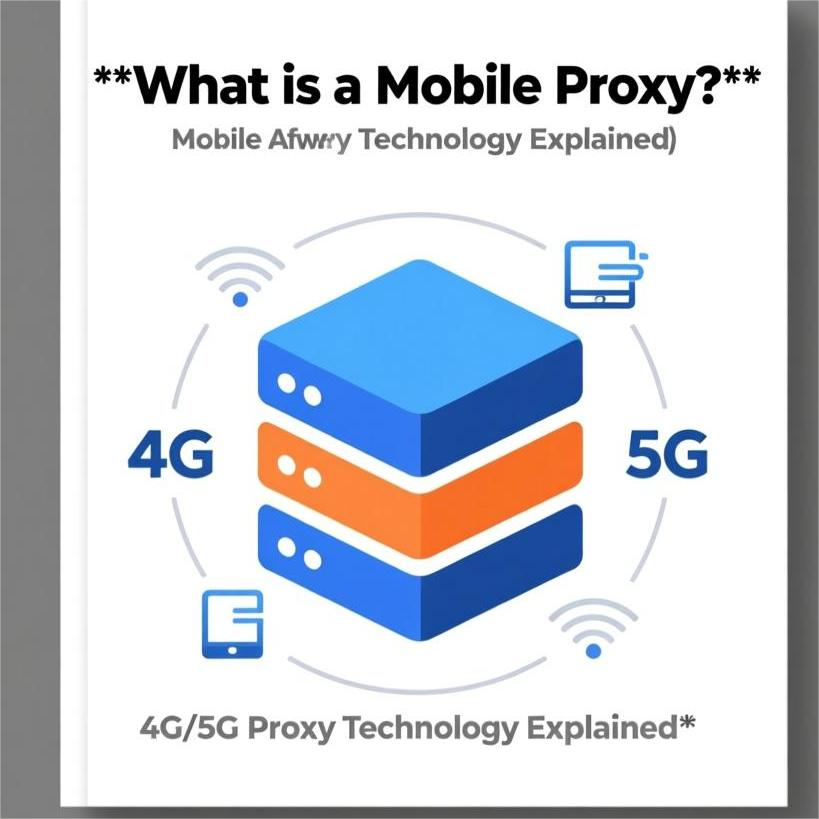
What is a Mobile Proxy? 4G/5G Proxy Technology Explained
Last updated: 2026-01-31
Quick Definition
A mobile proxy routes internet traffic through IP addresses assigned by mobile network operators (MNOs) to devices connected via 4G LTE or 5G cellular networks. These IPs are shared among thousands of real mobile users through Carrier-Grade NAT (CGNAT), making them extremely difficult to block without affecting legitimate mobile traffic.
How Mobile Proxies Work
Mobile proxies leverage the unique architecture of cellular networks where carriers assign IP addresses dynamically to millions of devices:
Mobile Network IP Assignment:
┌─────────────────────────────────────────────────────────────────┐
│                    Mobile Carrier Network                        │
│  ┌──────────┐    ┌─────────────┐    ┌──────────────────────┐   │
│  │ Cell     │───▶│   CGNAT     │───▶│   Public IP Pool     │   │
│  │ Tower    │    │   Gateway   │    │   (Limited IPs)      │   │
│  └──────────┘    └─────────────┘    └──────────────────────┘   │
│       │                │                       │                │
│       ▼                ▼                       ▼                │
│  ┌─────────────────────────────────────────────────────┐       │
│  │  Thousands of mobile devices share each public IP   │       │
│  │  Device A: 10.x.x.1 ──┐                             │       │
│  │  Device B: 10.x.x.2 ──┼──▶ Public IP: 174.56.78.90  │       │
│  │  Device C: 10.x.x.3 ──┘                             │       │
│  └─────────────────────────────────────────────────────┘       │
└─────────────────────────────────────────────────────────────────┘

Mobile Proxy Architecture:
┌────────┐     ┌─────────────┐     ┌──────────────┐     ┌────────┐
│ Client │────▶│ Proxy       │────▶│ 4G/5G Modem  │────▶│ Target │
│        │     │ Gateway     │     │ (Real SIM)   │     │ Server │
└────────┘     └─────────────┘     └──────────────┘     └────────┘
Key components of mobile proxy infrastructure:
- 4G/5G Modems: Physical devices with active SIM cards connected to carrier networks
- SIM Cards: Subscriber identity modules registered with mobile carriers
- Modem Farms: Arrays of modems managed for IP rotation
- IP Rotation Controller: Triggers airplane mode or network reconnection to obtain new IPs
Why Mobile IPs Have High Trust
| Factor | Explanation | Detection Impact |
|---|---|---|
| CGNAT Architecture | Single IP shared by 1000+ real users | Blocking affects many legitimate users |
| ASN Classification | Registered as mobile carrier, not hosting | Passes ASN-based filtering |
| Dynamic Assignment | IPs change with network reconnection | Reputation doesn't persist |
| Real User Traffic | Mixed with genuine mobile browsing | Behavioral patterns match real users |
| Limited IP Pool | Carriers have finite public IPs | Cannot blacklist entire carrier ranges |
Key Technical Parameters
| Parameter | Typical Value | Notes |
|---|---|---|
| Latency | 50-300ms | Higher than datacenter, varies by carrier |
| Bandwidth | 10-100 Mbps | Depends on 4G/5G signal strength |
| IP Rotation Time | 30 seconds - 5 minutes | Time to obtain new IP via reconnection |
| IP Pool Size | 10,000 - 500,000 | Smaller than residential, higher quality |
| Geographic Targeting | Country/Carrier level | City-level less precise than residential |
| Session Duration | 5-30 minutes typical | Before carrier reassigns IP |
| Success Rate | 97-99%+ | Highest among all proxy types |
| Cost | $3-20+ per GB | Most expensive proxy type |
Mobile Proxy Types
| Type | Infrastructure | IP Quality | Cost |
|---|---|---|---|
| Dedicated 4G Modem | Single modem per user | Highest | $200-500/month |
| Shared 4G Pool | Modem farm shared among users | High | $5-15/GB |
| 5G Mobile Proxy | 5G network connection | Highest | Premium pricing |
| Mobile SDK Network | App-based peer network | Medium-High | $3-8/GB |
Common Use Cases
| Use Case | Why Mobile Proxy | Alternative |
|---|---|---|
| Social media management | Platforms expect mobile access patterns | Residential (lower success) |
| Account creation | Highest trust for new registrations | None comparable |
| App testing | Authentic mobile network conditions | Device farms |
| Ad verification | View ads as mobile users see them | Residential mobile |
| Sensitive scraping | When residential IPs get blocked | Rotate faster |
| Mobile game testing | Real carrier network simulation | Emulators (less accurate) |
IP Rotation Methods
Automatic Rotation (Airplane Mode Toggle):
┌──────────────────────────────────────────────────────────────┐
│ Time 00:00 - Connected: IP 174.56.78.90                      │
│ Time 00:10 - Toggle Airplane Mode ON                         │
│ Time 00:10 - Connection dropped, IP released                 │
│ Time 00:12 - Toggle Airplane Mode OFF                        │
│ Time 00:15 - Reconnected: NEW IP 174.56.82.156              │
└──────────────────────────────────────────────────────────────┘

API-Triggered Rotation:
POST /api/rotate-ip
{
  "modem_id": "modem-047",
  "method": "airplane_toggle",
  "wait_for_new_ip": true,
  "timeout_seconds": 60
}

Response:
{
  "old_ip": "174.56.78.90",
  "new_ip": "174.56.82.156",
  "rotation_time_ms": 18450,
  "carrier": "T-Mobile US"
}
Verify your mobile proxy's carrier classification using the IP Checker tool. Test connection stability with the Proxy Tester.
FAQ
What is CGNAT and why does it matter for mobile proxies?
Carrier-Grade NAT (CGNAT) is a technology where mobile carriers assign private IPs to devices and translate them to shared public IPs. This means thousands of legitimate users share each public IP, making it impractical for websites to block mobile IPs without affecting real customers.
Why are mobile proxies more expensive than residential proxies?
Mobile proxies require physical 4G/5G modems, active SIM cards with data plans, and infrastructure to manage modem farms. The ongoing carrier data costs and hardware maintenance make them significantly more expensive to operate than software-based residential networks.
How long can I keep the same mobile IP?
Mobile IP sessions typically last 5-30 minutes before carriers may reassign them. Some providers offer extended sticky sessions, but the carrier ultimately controls IP assignment. Requesting rotation provides a new IP within 30 seconds to 5 minutes.
Are 5G proxies better than 4G proxies?
5G proxies offer faster speeds (potentially 100+ Mbps) and lower latency. However, for most proxy use cases, the trust level is similar since both use carrier-assigned IPs. 5G proxies are beneficial when bandwidth or speed is critical.
Can I target specific cities with mobile proxies?
Mobile proxy geographic targeting is typically limited to country and carrier level. Unlike residential proxies, precise city targeting is less reliable because mobile IPs are assigned from regional carrier pools rather than physical locations.
What happens if my mobile proxy IP gets flagged?
Simply rotate to a new IP. Since mobile IPs are dynamically assigned and shared among many users, reputation doesn't persist to your next session. The flagged IP returns to the carrier's pool and is reassigned to other users.
Related Tools
- IP Checker - Verify carrier ASN and mobile classification
- Proxy Tester - Test mobile proxy speed and reliability
- User Agent Generator - Generate matching mobile device user agents
Tags
Ready to start scraping?
Get access to millions of residential proxies across 195+ countries. Instant activation.
Get Started Now